Buy ip-forum.eu ?
We are moving the project
ip-forum.eu .
Are you interested in purchasing the domain
ip-forum.eu ?
domain@kv-gmbh.de · 0541-91531010
Buy ip-forum.eu ?
What is the difference between standard enthalpy of formation, enthalpy of formation, and reaction enthalpy?
The standard enthalpy of formation is the enthalpy change that occurs when one mole of a compound is formed from its elements in their standard states. Enthalpy of formation is the enthalpy change that occurs when one mole of a compound is formed from its elements in their standard states, but it can be under non-standard conditions. Reaction enthalpy is the enthalpy change that occurs in a chemical reaction, which can be exothermic (heat is released) or endothermic (heat is absorbed). **
What is enthalpy?
Enthalpy is a thermodynamic property of a system that represents the total energy of the system, including its internal energy and the energy required to maintain constant pressure. It is often denoted as H and is expressed in units of joules. Enthalpy is important in understanding and analyzing processes such as chemical reactions and phase changes, as it provides a measure of the heat content of a system. In practical terms, enthalpy change is often used to quantify the heat absorbed or released during a process at constant pressure. **


Similar search terms for Enthalpy
Top-Angebote
Products related to Enthalpy:
-
Our Voices: Neighborhood & Community Boxed SetFoster a feeling of belonging while building key reading skills with these colorful storybooks that spotlight a variety of neighborhoods and communities. The 10 charming stories feature characters from different cultural backgrounds who learn about...32,37 $*Shipping: 0,00 $Secure redirect to the provider
-
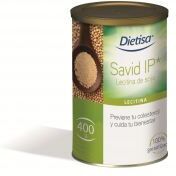
Dietisa Sap Ip (Lecithin Soy)Nutrition and Supplements Lecithins Dietisa Sap Ip (Lecithin Soy) Nutritional preparation of soy lecithin that helps maintain normal cholesterol levels. Savid IP (Identity preserved) offers the highest quality and homogeneity in its nutritional contributions, as well as Guaranteed traceability, which ensures the absence of genetically modified organisms (GMOs), from their seeds and culture, to the complete elaboration of the product. Soy Lecithin Savid IP is a natural mixture of phospholipids, mainly phosphatidylcholine It is recommended to take 2 tablespoons per day (12 g). Can be consumed alone or incorporated to meals13,21 £*Shipping: 3,99 £Secure redirect to the provider
-
CentreSoft PlayStation 5 Adventure Software (Disc)This PlayStation 5 software falls within the adventure and arcade action-adventure category. As a small family-run business, we use AI to assist us in providing detailed product information. If you have any questions or concerns, please don't hesitate to contact us for clarification. CentreSoft is the brand behind this product.27,79 £*Shipping: 3,95 £Secure redirect to the provider



-
What is the difference between bond enthalpy and formation enthalpy?
Bond enthalpy is the energy required to break a specific chemical bond in a molecule, while formation enthalpy is the energy change when one mole of a compound is formed from its elements in their standard states. Bond enthalpy is specific to a particular bond within a molecule, while formation enthalpy is a measure of the overall energy change in forming a compound. Bond enthalpy is typically measured in kilojoules per mole (kJ/mol), while formation enthalpy is also measured in kilojoules per mole (kJ/mol). **
-
What is Hess's law for standard formation enthalpy and combustion enthalpy?
Hess's law states that the total enthalpy change for a reaction is the same regardless of the number of steps taken to reach the final products. This principle can be applied to standard formation enthalpies and combustion enthalpies by using a series of known enthalpy changes to calculate the overall enthalpy change for a reaction. By manipulating and combining these known enthalpies, Hess's law allows us to determine the enthalpy change for reactions that may not be easily measured directly. **
-
What is the difference between standard formation enthalpy and enthalpy change?
Standard formation enthalpy is the enthalpy change that occurs when one mole of a compound is formed from its elements in their standard states. It is a specific type of enthalpy change that is measured under standard conditions. Enthalpy change, on the other hand, is a more general term that refers to the overall change in enthalpy of a system during a chemical reaction or process, regardless of whether it involves formation of a compound or not. Enthalpy change can be positive (endothermic) or negative (exothermic), depending on whether energy is absorbed or released during the process. **
-
How to calculate the reaction enthalpy from the molar bond enthalpy?
To calculate the reaction enthalpy from the molar bond enthalpy, you need to consider the difference between the sum of the bond enthalpies of the reactants and the sum of the bond enthalpies of the products. First, calculate the total bond enthalpy of all the bonds broken in the reactants, and then calculate the total bond enthalpy of all the bonds formed in the products. The reaction enthalpy is then the difference between these two values, with the bond enthalpies of the products subtracted from the bond enthalpies of the reactants. This calculation allows you to determine whether a reaction is exothermic (releasing heat) or endothermic (absorbing heat). **


What is Hess's law equation for standard formation enthalpy and combustion enthalpy?
Hess's law states that the overall enthalpy change for a reaction is the same regardless of the number of steps taken to reach the final products. For standard formation enthalpy, the equation is: ∆Hf°(products) = ∑∆Hf°(products) - ∑∆Hf°(reactants). For combustion enthalpy, the equation is: ∆Hcomb° = ∑∆Hf°(products) - ∑∆Hf°(reactants). These equations allow us to calculate the enthalpy change of a reaction using the enthalpies of formation of the reactants and products. **
What is the difference between standard enthalpy of formation and enthalpy change?
The standard enthalpy of formation is the enthalpy change that occurs when one mole of a compound is formed from its elements in their standard states. It is a specific type of enthalpy change that is measured under standard conditions. On the other hand, enthalpy change refers to the overall change in enthalpy of a system during a chemical reaction or process, which can include various types of enthalpy changes such as enthalpy of reaction, enthalpy of combustion, or enthalpy of solution. In summary, standard enthalpy of formation is a specific type of enthalpy change that relates to the formation of a compound from its elements, while enthalpy change is a broader term that encompasses various types of enthalpy changes in a system. **
Top-Angebote
Products related to Enthalpy:
-
Concord Health Supply Wrist-Worn Pulse Oximeter with Digital Software Download and Download Cable""" Rechargeable Wrist-Worn Pulse Oximeter The wrist pulse oximeter features a color, multi-direction OLED screen with four levels of brightness. The easy-to-read color OLED display can be adjusted to be readable either horizontally or vertically. The..."109,00 $*Shipping: 0,00 $Secure redirect to the provider
-
Our Voices: Neighborhood & Community Boxed SetFoster a feeling of belonging while building key reading skills with these colorful storybooks that spotlight a variety of neighborhoods and communities. The 10 charming stories feature characters from different cultural backgrounds who learn about...32,37 $*Shipping: 0,00 $Secure redirect to the provider
-
What is the difference between standard enthalpy of formation, enthalpy of formation, and reaction enthalpy?
The standard enthalpy of formation is the enthalpy change that occurs when one mole of a compound is formed from its elements in their standard states. Enthalpy of formation is the enthalpy change that occurs when one mole of a compound is formed from its elements in their standard states, but it can be under non-standard conditions. Reaction enthalpy is the enthalpy change that occurs in a chemical reaction, which can be exothermic (heat is released) or endothermic (heat is absorbed). **
-
What is enthalpy?
Enthalpy is a thermodynamic property of a system that represents the total energy of the system, including its internal energy and the energy required to maintain constant pressure. It is often denoted as H and is expressed in units of joules. Enthalpy is important in understanding and analyzing processes such as chemical reactions and phase changes, as it provides a measure of the heat content of a system. In practical terms, enthalpy change is often used to quantify the heat absorbed or released during a process at constant pressure. **
-
What is the difference between bond enthalpy and formation enthalpy?
Bond enthalpy is the energy required to break a specific chemical bond in a molecule, while formation enthalpy is the energy change when one mole of a compound is formed from its elements in their standard states. Bond enthalpy is specific to a particular bond within a molecule, while formation enthalpy is a measure of the overall energy change in forming a compound. Bond enthalpy is typically measured in kilojoules per mole (kJ/mol), while formation enthalpy is also measured in kilojoules per mole (kJ/mol). **
-
What is Hess's law for standard formation enthalpy and combustion enthalpy?
Hess's law states that the total enthalpy change for a reaction is the same regardless of the number of steps taken to reach the final products. This principle can be applied to standard formation enthalpies and combustion enthalpies by using a series of known enthalpy changes to calculate the overall enthalpy change for a reaction. By manipulating and combining these known enthalpies, Hess's law allows us to determine the enthalpy change for reactions that may not be easily measured directly. **
Similar search terms for Enthalpy
-
Dietisa Sap Ip (Lecithin Soy)Nutrition and Supplements Lecithins Dietisa Sap Ip (Lecithin Soy) Nutritional preparation of soy lecithin that helps maintain normal cholesterol levels. Savid IP (Identity preserved) offers the highest quality and homogeneity in its nutritional contributions, as well as Guaranteed traceability, which ensures the absence of genetically modified organisms (GMOs), from their seeds and culture, to the complete elaboration of the product. Soy Lecithin Savid IP is a natural mixture of phospholipids, mainly phosphatidylcholine It is recommended to take 2 tablespoons per day (12 g). Can be consumed alone or incorporated to meals13,21 £*Shipping: 3,99 £Secure redirect to the provider
-
CentreSoft PlayStation 5 Adventure Software (Disc)This PlayStation 5 software falls within the adventure and arcade action-adventure category. As a small family-run business, we use AI to assist us in providing detailed product information. If you have any questions or concerns, please don't hesitate to contact us for clarification. CentreSoft is the brand behind this product.27,79 £*Shipping: 3,95 £Secure redirect to the provider
-
Sesderma Reti Age 5 Liposomal Serum Anti-Aging Innovation 30mLA facial serum for wrinkles and signs of ageing. Reduces wrinkles and fine lines. Hydrates and strengthens barrier. Restores youthful radiance. 5-Retinoid System: smooths wrinkles, accelerates renewal, and boosts collagen. Biomimetic Peptides: fill expression lines by stimulating collagen synthesis.40,73 £*Shipping: 5,22 £Secure redirect to the provider
-
What is the difference between standard formation enthalpy and enthalpy change?
Standard formation enthalpy is the enthalpy change that occurs when one mole of a compound is formed from its elements in their standard states. It is a specific type of enthalpy change that is measured under standard conditions. Enthalpy change, on the other hand, is a more general term that refers to the overall change in enthalpy of a system during a chemical reaction or process, regardless of whether it involves formation of a compound or not. Enthalpy change can be positive (endothermic) or negative (exothermic), depending on whether energy is absorbed or released during the process. **
-
How to calculate the reaction enthalpy from the molar bond enthalpy?
To calculate the reaction enthalpy from the molar bond enthalpy, you need to consider the difference between the sum of the bond enthalpies of the reactants and the sum of the bond enthalpies of the products. First, calculate the total bond enthalpy of all the bonds broken in the reactants, and then calculate the total bond enthalpy of all the bonds formed in the products. The reaction enthalpy is then the difference between these two values, with the bond enthalpies of the products subtracted from the bond enthalpies of the reactants. This calculation allows you to determine whether a reaction is exothermic (releasing heat) or endothermic (absorbing heat). **
-
What is Hess's law equation for standard formation enthalpy and combustion enthalpy?
Hess's law states that the overall enthalpy change for a reaction is the same regardless of the number of steps taken to reach the final products. For standard formation enthalpy, the equation is: ∆Hf°(products) = ∑∆Hf°(products) - ∑∆Hf°(reactants). For combustion enthalpy, the equation is: ∆Hcomb° = ∑∆Hf°(products) - ∑∆Hf°(reactants). These equations allow us to calculate the enthalpy change of a reaction using the enthalpies of formation of the reactants and products. **
-
What is the difference between standard enthalpy of formation and enthalpy change?
The standard enthalpy of formation is the enthalpy change that occurs when one mole of a compound is formed from its elements in their standard states. It is a specific type of enthalpy change that is measured under standard conditions. On the other hand, enthalpy change refers to the overall change in enthalpy of a system during a chemical reaction or process, which can include various types of enthalpy changes such as enthalpy of reaction, enthalpy of combustion, or enthalpy of solution. In summary, standard enthalpy of formation is a specific type of enthalpy change that relates to the formation of a compound from its elements, while enthalpy change is a broader term that encompasses various types of enthalpy changes in a system. **
* All prices are inclusive of VAT and, if applicable, plus shipping costs. The offer information is based on the details provided by the respective shop and is updated through automated processes. Real-time updates do not occur, so deviations can occur in individual cases. ** Note: Parts of this content were created by AI.