Buy ip-forum.eu ?
We are moving the project
ip-forum.eu .
Are you interested in purchasing the domain
ip-forum.eu ?
domain@kv-gmbh.de · 0541-91531010
Buy ip-forum.eu ?
Is it normal to have over 100 driving lessons?
It is not necessarily normal to have over 100 driving lessons, as the average number of lessons needed to pass a driving test is around 40-50. However, the number of lessons required can vary greatly depending on the individual's learning style, confidence level, and previous driving experience. Some people may require more lessons to feel comfortable and confident behind the wheel, while others may need fewer. It is important to focus on learning at your own pace and feeling confident in your abilities before taking the driving test. **
What is the difference between information technology and computer science?
Information technology focuses on the application of technology to solve business problems and manage information, while computer science is more theoretical and focuses on the design and development of software and hardware systems. Information technology professionals typically work on implementing and managing technology solutions, while computer science professionals work on the underlying technology itself. In summary, information technology is more applied and practical, while computer science is more theoretical and technical. **
Similar search terms for Scholastic-100-Science-Lessons
Top-Angebote
Products related to Scholastic-100-Science-Lessons:
-
Scholastic 100 Science Lessons Year 5 - 2014 National Curriculum Plan And Teach Study Guide100 4479770984563: Year 5 (100 Lessons - New Curriculum) Master the 2014 Curriculum with Scholastic's 100 Lessons. The new National Curriculum has landed and Scholastic's acclaimed 100 Lessons series is back to help your school prepare. Trusted by teachers for 15 years and selling more than one million copies, 100 Lessons has now been completely rewritten and is fully in line with the 2014 objectives. Our new 100 Lessons and Planning Guides will make planning and teaching the new requirements simple and stress-free. Teach a whole year's lessons carefully matched to the new objectives. Flexible pick-up-and-use format containing over 100 ready-made lesson plans. Use the lessons as a complete plan for the year, or as a flexible filler when there's a gap in your planning. Inspire pupils with photocopiable activities. Includes a CD-ROM full of interactive resources and media resources16,99 £*Shipping: 2,99 £Secure redirect to the provider
-
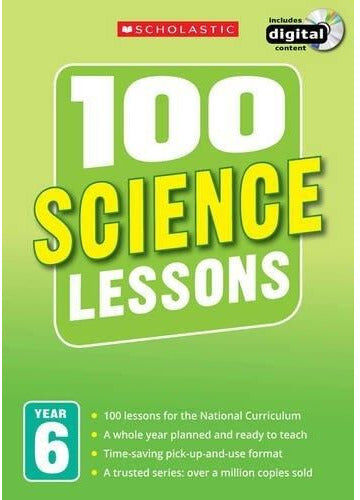
Scholastic 100 Science Lessons Year 6 - 2014 National Curriculum Plan And Teach Study Guide100 Science Lessons: Year 6 (100 Lessons - New Curriculum) Master the 2014 Curriculum with Scholastic's 100 Lessons. The new National Curriculum has landed and Scholastic's acclaimed 100 Lessons series is back to help your school prepare. Trusted by teachers for 15 years and selling more than one million copies, 100 Lessons has now been completely rewritten and is fully in line with the 2014 objectives. Our new 100 Lessons and Planning Guides will make planning and teaching the new requirements simple and stress-free.14,99 £*Shipping: 2,99 £Secure redirect to the provider
-
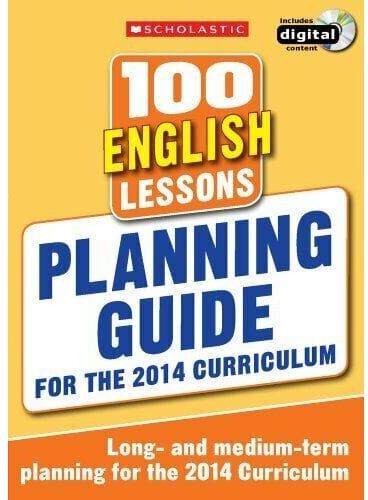
Scholastic 100 English Lessons: Planning Guide (100 Lessons - 2014 Curriculum)Master the Curriculum with Scholastic's 100 Lessons. Scholastic's acclaimed 100 Lessons series is here to help your school prepare. Trusted by teachers for 15 years and selling more than one million copies, 100 Lessons is fully in line with the Curriculum objectives. Our new 100 Lessons and Planning Guides will make planning and teaching the new requirements simple and stress-free. Understand the requirements and plan with confidence for all six years Long- and medium-term planning and progression, ideal for subject coordinators Get a clear overview with simple week-by-week breakdowns on how to create units of work Includes a FREE A2 poster that gives an overview of progression and a CD-ROM full of editable planning grids View sample resources at www.scholastic.co.uk/100lessons9,99 £*Shipping: 2,99 £Secure redirect to the provider
-
Scholastic National Curriculum Science Planning Guide Editable Long-Term Progression And 100 Lessons - Non FictionTitle:. National Curriculum Science Planning Guide. With editable long- and medium-term planning and progression, ideal for subject coordinators (100 Lessons) (100 Lessons - New Curriculum) Overview:. Designed for busy primary science coordinators, this National Curriculum Science Planning Guide brings clarity and coherence to delivering the new science programme. It bundles editable long-term and medium-term planning with a structured progression framework, enabling schools to map science units across terms and years while ensuring alignment to the National Curriculum. The guide features 100 ready-to-deliver lessons, each paired with clear learning outcomes, practical activity ideas, and assessment prompts that help teachers monitor progress and communicate gains to parents and senior leaders. By centralising planning in one resource, you can reduce duplication, streamline teacher onboarding, and maintain a consistent reading and learning journey for all pupils. The editable format means planning can be tailored to your school’s context, allowing for differentiation, flexible pacing, and timely curriculum updates as priorities shift. This is the dependable backbone for a robust science offer, empowering students to build solid knowledge, develop inquiry skills, and apply scientific thinking in real-world situations. It’s a practical, classroom-ready toolkit that supports efficient leadership, clear progression, and measurable progress throughout the year. What Makes This Book Stand Out:. What sets this planning guide apart is its laser focus on progression and practicality. It moves beyond topic lists to provide a coherent, year-by-year pathway that strengthens the continuity of learning across year groups. The 100 lessons are designed to be taught in a straightforward sequence, with explicit outcomes, suggested investigations, and prompts for assessment and feedback. The editable structure is a game changer for schools: you can adapt the pacing, swap units to reflect local contexts, and retain a clear through-line from early working scientifically skills to more advanced concepts. Written with the realities of school life in mind, the guide balances accessibility for all teachers with the ambition of a rigorous science curriculum. The result is a reliable, scalable plan your department can own, communicate, and build upon with confidence. Who This Book Is Perfect For:. This planning guide is ideal for primary science leaders, subject coordinators, and senior colleagues tasked with implementing and sustaining the National Curriculum in science. It suits schools undergoing the new curriculum rollout, academies seeking a unified scheme of work, and teams needing a clear, auditable plan for lessons across Key Stage 1 and Key Stage 2. It’s also a valuable resource for new staff induction, lesson resource planning, and year-on-year progression reviews. If you’re responsible for safeguarding a consistent science experience across multiple classes, or...20,00 £*Shipping: 2,99 £Secure redirect to the provider


-
What is the difference between computer science and information technology?
Computer science is a field that focuses on the theoretical foundations of computation and algorithms, as well as the design and development of software systems. Information technology, on the other hand, is more focused on the practical application of computer systems to manage and process information. While computer science deals with the theory behind computing, information technology deals with the implementation and management of computer systems to meet the needs of businesses and organizations. In summary, computer science is more theoretical and focuses on the science behind computing, while information technology is more practical and focuses on the application of computing systems. **
-
What further training can be undertaken as a specialist in computer science or digital networking?
As a specialist in computer science or digital networking, further training can be undertaken in areas such as cybersecurity, cloud computing, data analytics, artificial intelligence, and machine learning. These specialized areas are in high demand and can help professionals stay current with the latest technologies and trends in the industry. Pursuing certifications from reputable organizations or completing advanced degree programs can also enhance one's skills and knowledge in these areas. Additionally, attending workshops, conferences, and networking events can provide valuable opportunities to learn from experts and expand one's professional network. **
-
What is the difference between computer science, information technology, and IT?
Computer science is a field that focuses on the theoretical foundations of computation and algorithms, while information technology (IT) is a broader term that encompasses the use of technology to manage and process information. IT professionals typically work with hardware, software, networks, and databases to support the organization's technology needs. On the other hand, IT is a subset of information technology that specifically deals with the use of technology to manage and process information within an organization. **
-
What is the difference between a specialist in computer science for system integration and a specialist in computer science for digital networking?
A specialist in computer science for system integration focuses on integrating different hardware and software systems to work together seamlessly. They are responsible for ensuring that all components of a system, such as databases, servers, and applications, can communicate and function together effectively. On the other hand, a specialist in computer science for digital networking focuses on designing, implementing, and managing digital networks, such as local area networks (LANs), wide area networks (WANs), and wireless networks. They are responsible for ensuring that data and information can be transmitted efficiently and securely across these networks. In summary, the main difference between the two specialists lies in their focus areas: system integration specialists focus on integrating various components of a system, while digital networking specialists focus on designing and managing digital networks. **
Can one study computer science with a technical diploma in information technology?
Yes, it is possible to study computer science with a technical diploma in information technology. Many universities and colleges offer bridge programs or pathways for individuals with technical diplomas to pursue a degree in computer science. These programs may require additional coursework to cover foundational concepts in computer science. With dedication and hard work, individuals with a technical diploma in information technology can successfully transition into studying computer science. **
Could science fiction technology become real?
Yes, science fiction technology could become real in the future. Many of the technological advancements that were once considered science fiction, such as video calling, self-driving cars, and virtual reality, have already become a reality. With continued advancements in science and technology, it is possible that other futuristic technologies, such as teleportation or advanced artificial intelligence, could also become a reality in the future. While some science fiction technologies may still be far-fetched, it is important to remember that many of today's realities were once considered impossible in the past. **
Top-Angebote
Products related to Scholastic-100-Science-Lessons:
-
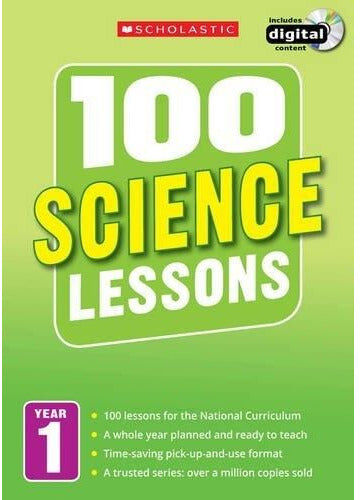
Scholastic 100 Science Lessons Year 1 - 2014 National Curriculum Plan And Teach Study Guide100 Science Lessons: Year 1 (100 Lessons - New Curriculum) Master the 2014 Curriculum with Scholastic's 100 Lessons. The new National Curriculum has landed and Scholastic's acclaimed 100 Lessons series is back to help your school prepare. Trusted by teachers for 15 years and selling more than one million copies, 100 Lessons has now been completely rewritten and is fully in line with the 2014 objectives. Our new 100 Lessons and Planning Guides will make planning and teaching the new requirements simple and stress-free. Teach a whole year's lessons carefully matched to the new objectives. Flexible pick-up-and-use format containing over 100 ready-made lesson plans. Use the lessons as a complete plan for the year, or as a flexible filler when there's a gap in your planning. Inspire pupils with photocopiable activities. Includes a CD-ROM full of interactive resources and media resources12,99 £*Shipping: 2,99 £Secure redirect to the provider
-
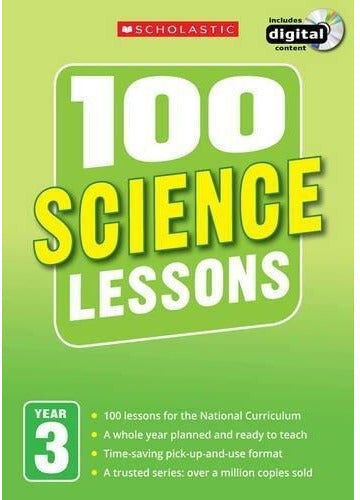
Scholastic 100 Science Lessons Year 3 - 2014 National Curriculum Plan And Teach Study Guide100 Science Lessons: Year 3 (100 Lessons - New Curriculum) Master the 2014 Curriculum with Scholastic's 100 Lessons. The new National Curriculum has landed and Scholastic's acclaimed 100 Lessons series is back to help your school prepare. Trusted by teachers for 15 years and selling more than one million copies, 100 Lessons has now been completely rewritten and is fully in line with the 2014 objectives. Our new 100 Lessons and Planning Guides will make planning and teaching the new requirements simple and stress-free. Teach a whole year's lessons carefully matched to the new objectives. Flexible pick-up-and-use format containing over 100 ready-made lesson plans. Use the lessons as a complete plan for the year, or as a flexible filler when there's a gap in your planning. Inspire pupils with photocopiable activities. Includes a CD-ROM full of interactive resources and media resources15,95 £*Shipping: 2,99 £Secure redirect to the provider
-
Scholastic 100 Science Lessons Year 5 - 2014 National Curriculum Plan And Teach Study Guide100 4479770984563: Year 5 (100 Lessons - New Curriculum) Master the 2014 Curriculum with Scholastic's 100 Lessons. The new National Curriculum has landed and Scholastic's acclaimed 100 Lessons series is back to help your school prepare. Trusted by teachers for 15 years and selling more than one million copies, 100 Lessons has now been completely rewritten and is fully in line with the 2014 objectives. Our new 100 Lessons and Planning Guides will make planning and teaching the new requirements simple and stress-free. Teach a whole year's lessons carefully matched to the new objectives. Flexible pick-up-and-use format containing over 100 ready-made lesson plans. Use the lessons as a complete plan for the year, or as a flexible filler when there's a gap in your planning. Inspire pupils with photocopiable activities. Includes a CD-ROM full of interactive resources and media resources16,99 £*Shipping: 2,99 £Secure redirect to the provider
-
Scholastic 100 Science Lessons Year 6 - 2014 National Curriculum Plan And Teach Study Guide100 Science Lessons: Year 6 (100 Lessons - New Curriculum) Master the 2014 Curriculum with Scholastic's 100 Lessons. The new National Curriculum has landed and Scholastic's acclaimed 100 Lessons series is back to help your school prepare. Trusted by teachers for 15 years and selling more than one million copies, 100 Lessons has now been completely rewritten and is fully in line with the 2014 objectives. Our new 100 Lessons and Planning Guides will make planning and teaching the new requirements simple and stress-free.14,99 £*Shipping: 2,99 £Secure redirect to the provider
-
Is it normal to have over 100 driving lessons?
It is not necessarily normal to have over 100 driving lessons, as the average number of lessons needed to pass a driving test is around 40-50. However, the number of lessons required can vary greatly depending on the individual's learning style, confidence level, and previous driving experience. Some people may require more lessons to feel comfortable and confident behind the wheel, while others may need fewer. It is important to focus on learning at your own pace and feeling confident in your abilities before taking the driving test. **
-
What is the difference between information technology and computer science?
Information technology focuses on the application of technology to solve business problems and manage information, while computer science is more theoretical and focuses on the design and development of software and hardware systems. Information technology professionals typically work on implementing and managing technology solutions, while computer science professionals work on the underlying technology itself. In summary, information technology is more applied and practical, while computer science is more theoretical and technical. **
-
What is the difference between computer science and information technology?
Computer science is a field that focuses on the theoretical foundations of computation and algorithms, as well as the design and development of software systems. Information technology, on the other hand, is more focused on the practical application of computer systems to manage and process information. While computer science deals with the theory behind computing, information technology deals with the implementation and management of computer systems to meet the needs of businesses and organizations. In summary, computer science is more theoretical and focuses on the science behind computing, while information technology is more practical and focuses on the application of computing systems. **
-
What further training can be undertaken as a specialist in computer science or digital networking?
As a specialist in computer science or digital networking, further training can be undertaken in areas such as cybersecurity, cloud computing, data analytics, artificial intelligence, and machine learning. These specialized areas are in high demand and can help professionals stay current with the latest technologies and trends in the industry. Pursuing certifications from reputable organizations or completing advanced degree programs can also enhance one's skills and knowledge in these areas. Additionally, attending workshops, conferences, and networking events can provide valuable opportunities to learn from experts and expand one's professional network. **
Similar search terms for Scholastic-100-Science-Lessons
-
Scholastic 100 English Lessons: Planning Guide (100 Lessons - 2014 Curriculum)Master the Curriculum with Scholastic's 100 Lessons. Scholastic's acclaimed 100 Lessons series is here to help your school prepare. Trusted by teachers for 15 years and selling more than one million copies, 100 Lessons is fully in line with the Curriculum objectives. Our new 100 Lessons and Planning Guides will make planning and teaching the new requirements simple and stress-free. Understand the requirements and plan with confidence for all six years Long- and medium-term planning and progression, ideal for subject coordinators Get a clear overview with simple week-by-week breakdowns on how to create units of work Includes a FREE A2 poster that gives an overview of progression and a CD-ROM full of editable planning grids View sample resources at www.scholastic.co.uk/100lessons9,99 £*Shipping: 2,99 £Secure redirect to the provider
-
Scholastic National Curriculum Science Planning Guide Editable Long-Term Progression And 100 Lessons - Non FictionTitle:. National Curriculum Science Planning Guide. With editable long- and medium-term planning and progression, ideal for subject coordinators (100 Lessons) (100 Lessons - New Curriculum) Overview:. Designed for busy primary science coordinators, this National Curriculum Science Planning Guide brings clarity and coherence to delivering the new science programme. It bundles editable long-term and medium-term planning with a structured progression framework, enabling schools to map science units across terms and years while ensuring alignment to the National Curriculum. The guide features 100 ready-to-deliver lessons, each paired with clear learning outcomes, practical activity ideas, and assessment prompts that help teachers monitor progress and communicate gains to parents and senior leaders. By centralising planning in one resource, you can reduce duplication, streamline teacher onboarding, and maintain a consistent reading and learning journey for all pupils. The editable format means planning can be tailored to your school’s context, allowing for differentiation, flexible pacing, and timely curriculum updates as priorities shift. This is the dependable backbone for a robust science offer, empowering students to build solid knowledge, develop inquiry skills, and apply scientific thinking in real-world situations. It’s a practical, classroom-ready toolkit that supports efficient leadership, clear progression, and measurable progress throughout the year. What Makes This Book Stand Out:. What sets this planning guide apart is its laser focus on progression and practicality. It moves beyond topic lists to provide a coherent, year-by-year pathway that strengthens the continuity of learning across year groups. The 100 lessons are designed to be taught in a straightforward sequence, with explicit outcomes, suggested investigations, and prompts for assessment and feedback. The editable structure is a game changer for schools: you can adapt the pacing, swap units to reflect local contexts, and retain a clear through-line from early working scientifically skills to more advanced concepts. Written with the realities of school life in mind, the guide balances accessibility for all teachers with the ambition of a rigorous science curriculum. The result is a reliable, scalable plan your department can own, communicate, and build upon with confidence. Who This Book Is Perfect For:. This planning guide is ideal for primary science leaders, subject coordinators, and senior colleagues tasked with implementing and sustaining the National Curriculum in science. It suits schools undergoing the new curriculum rollout, academies seeking a unified scheme of work, and teams needing a clear, auditable plan for lessons across Key Stage 1 and Key Stage 2. It’s also a valuable resource for new staff induction, lesson resource planning, and year-on-year progression reviews. If you’re responsible for safeguarding a consistent science experience across multiple classes, or...20,00 £*Shipping: 2,99 £Secure redirect to the provider
-
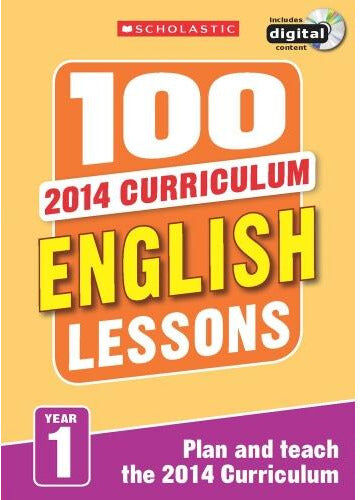
Scholastic 100 English Lessons Year 1 - 2014 National Curriculum Plan And Teach Study Guide100 English Lessons: Year 1 (100 Lessons - New Curriculum)100 english lessons year 1 Master the 2014 Curriculum with Scholastic's 100 Lessons. The new National Curriculum has landed and Scholastic's acclaimed 100 Lessons series is back to help your school prepare. Trusted by teachers for 15 years and selling more than one million copies, 100 Lessons has now been completely rewritten and is fully in line with the 2014 objectives. Our new 100 Lessons and Planning Guides will make planning and teaching the new requirements simple and stress-free. Teach a whole year's lessons carefully matched to the new objectives. Flexible pick-up-and-use format containing over 100 ready-made lesson plans. Use the lessons as a complete plan for the year, or as a flexible filler when there's a gap in your planning. Inspire pupils with photocopiable activities. Includes a CD-ROM full of interactive resources and media resources13,99 £*Shipping: 2,99 £Secure redirect to the provider
-
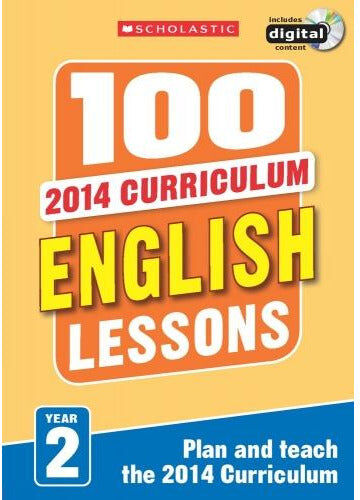
Scholastic 100 English Lessons Year 2 - 2014 National Curriculum Plan And Teach Study Guide100 English Lessons: Year 2 (100 Lessons - New Curriculum) 100 english lessons year 2 Master the 2014 Curriculum with Scholastic's 100 Lessons. The new National Curriculum has landed and Scholastic's acclaimed 100 Lessons series is back to help your school prepare. Trusted by teachers for 15 years and selling more than one million copies, 100 Lessons has now been completely rewritten and is fully in line with the 2014 objectives. Our new 100 Lessons and Planning Guides will make planning and teaching the new requirements simple and stress-free. Teach a whole year's lessons carefully matched to the new objectives. Flexible pick-up-and-use format containing over 100 ready-made lesson plans. Use the lessons as a complete plan for the year, or as a flexible filler when there's a gap in your planning. Inspire pupils with photocopiable activities. Includes a CD-ROM full of interactive resources and media resources13,99 £*Shipping: 2,99 £Secure redirect to the provider
-
What is the difference between computer science, information technology, and IT?
Computer science is a field that focuses on the theoretical foundations of computation and algorithms, while information technology (IT) is a broader term that encompasses the use of technology to manage and process information. IT professionals typically work with hardware, software, networks, and databases to support the organization's technology needs. On the other hand, IT is a subset of information technology that specifically deals with the use of technology to manage and process information within an organization. **
-
What is the difference between a specialist in computer science for system integration and a specialist in computer science for digital networking?
A specialist in computer science for system integration focuses on integrating different hardware and software systems to work together seamlessly. They are responsible for ensuring that all components of a system, such as databases, servers, and applications, can communicate and function together effectively. On the other hand, a specialist in computer science for digital networking focuses on designing, implementing, and managing digital networks, such as local area networks (LANs), wide area networks (WANs), and wireless networks. They are responsible for ensuring that data and information can be transmitted efficiently and securely across these networks. In summary, the main difference between the two specialists lies in their focus areas: system integration specialists focus on integrating various components of a system, while digital networking specialists focus on designing and managing digital networks. **
-
Can one study computer science with a technical diploma in information technology?
Yes, it is possible to study computer science with a technical diploma in information technology. Many universities and colleges offer bridge programs or pathways for individuals with technical diplomas to pursue a degree in computer science. These programs may require additional coursework to cover foundational concepts in computer science. With dedication and hard work, individuals with a technical diploma in information technology can successfully transition into studying computer science. **
-
Could science fiction technology become real?
Yes, science fiction technology could become real in the future. Many of the technological advancements that were once considered science fiction, such as video calling, self-driving cars, and virtual reality, have already become a reality. With continued advancements in science and technology, it is possible that other futuristic technologies, such as teleportation or advanced artificial intelligence, could also become a reality in the future. While some science fiction technologies may still be far-fetched, it is important to remember that many of today's realities were once considered impossible in the past. **
* All prices are inclusive of VAT and, if applicable, plus shipping costs. The offer information is based on the details provided by the respective shop and is updated through automated processes. Real-time updates do not occur, so deviations can occur in individual cases. ** Note: Parts of this content were created by AI.